




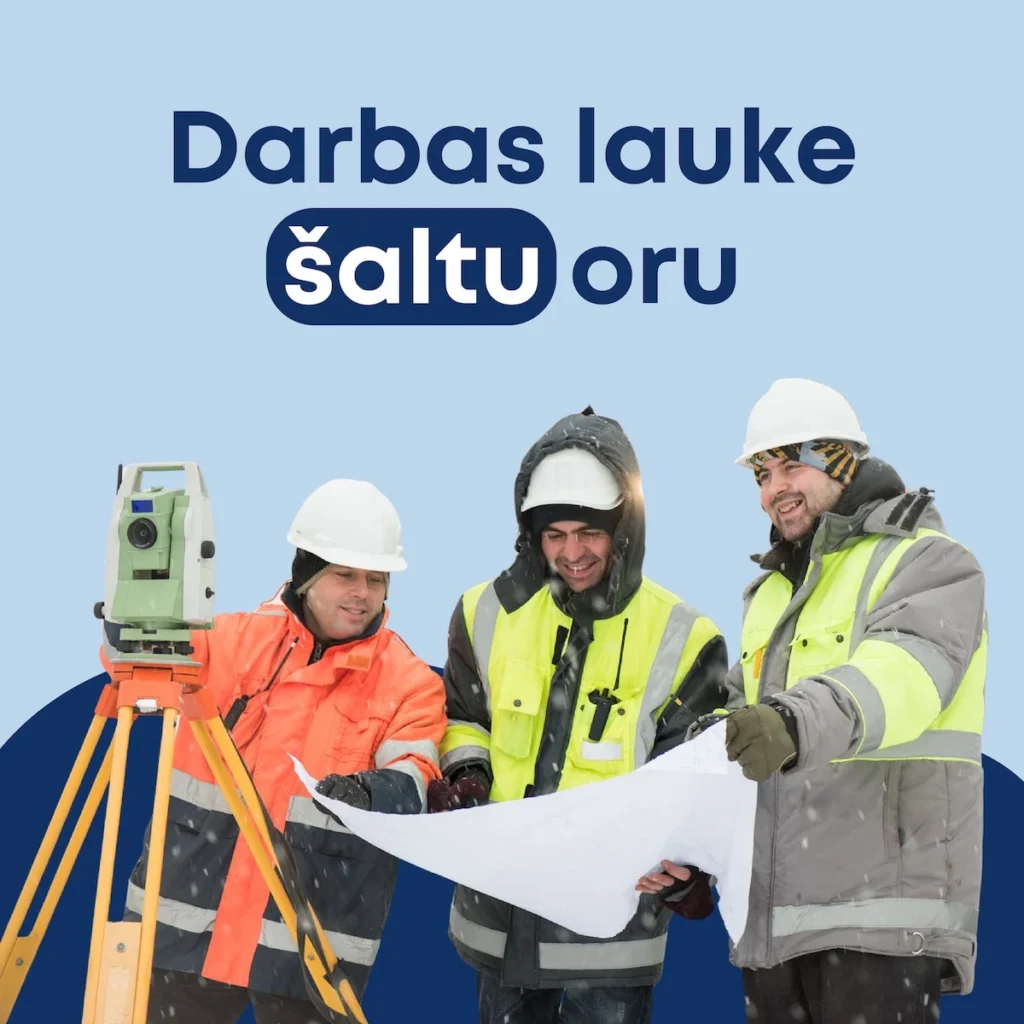
Working outdoors in winter poses additional health and safety challenges for workers. The cold affects not only well-being, but also job performance, reaction and the risk of accidents. The employer must assess the situation and ensure that work is organised safely even in difficult weather conditions.
This is what the employer must ensure, according to the recommendations of the Norwegian Labour Inspectorate:
👉 Proper clothing and protection from the cold - workers must be provided with warm, windproof and moisture-proof clothing. If normal work clothes do not provide sufficient protection, the employer must provide additional personal protective equipment.
👉 The ability to warm up and take breaks - access to warm lounges or other heated areas must be provided. More frequent or longer breaks must be provided in cold weather.
👉 Adaptation of work organisation - the employer must adapt work tasks, working hours and organisation to the weather conditions, including reduced pace and productivity requirements when the cold reduces workers' working capacity.
👉 Additional measures to prevent accidents - the cold can affect work equipment, tools and technical systems, so it's essential to have measures in place to avoid mistakes, breakdowns and dangerous situations.
👉 Managing the risk of falls and injuries - snow and ice increase the risk of slips, falls and other injuries, so preventive measures must be taken in workplaces and access areas.
It is important to know that Norwegian legislation does not set specific temperature limits for outdoor work. A general risk assessment must be carried out in each case, taking into account temperature, wind, humidity, the nature of the work, the duration of the work and the possibility of warming up. In some companies, work stops at very low temperatures - this is not a general requirement but a decision based on an internal risk assessment. ⚠️
If you have employees working outdoors in the winter and are unsure about safety requirements, we invite you to get in touch to help you assess the risks and find solutions.